





Concrete Admixtures Market: Global Industry Analysis and Forecast to 2015 to 2021
Concrete consists of mixture of sand, aggregate, binder, water and admixtures. Concrete admixtures contain chemical solvents or other mixtures that enhance its physical and chemical properties. Concrete admixtures are used extensively in almost all types of concrete structures.
The cost and performance benefits offered by chemical admixtures include:
- improved strength
- chemical resistance
- enhanced durability
- enhanced colour
- enhanced working properties
- significantly lower water and cement requirement
- superior surface finish
- better resistance to adverse climatic conditions
The market can be divided two broad categories: mineral admixture (including fly ash, granulated blast furnace slag, silica fume and rice husk ash) , and chemical admixture (including super plasticisers, normal plasticisers, accelerating agents, retarding agents, air-entraining agents, and waterproofing admixtures).
The improving quality of civil structures in the developing countries of Asia Pacific is offering double-digit growth for the concrete admixture market. Foreign direct investment (FDI) for infrastructure development in some of the major concrete civil structure markets such as India and China is also providing new opportunities for the concrete admixture market.
However, the increasing prices of concrete admixture chemicals coupled with a lack of awareness of the advantages of admixtures in the Asia Pacific and other developing regions is restricting the market expansion of the concrete admixture.
Growing residential requirements from the rising middle classes coupled with government initiatives such as stricter regulations, and upcoming infrastructure development programs such as a home for every citizen of India (India Vision 2020, Planning Commission of India), the development of transportation infrastructure and proposals of new megacities in both India and China is expected to drive new market opportunities for the concrete admixture market in upcoming years.
Asia Pacific is by far the largest market for concrete admixture followed by North America and Europe. Asia pacific and the Rest of the World region (including the Middle East, Latin America, and Africa) are two of the fasted growing markets for concrete admixture exhibiting a lucrative double-digit growth, whereas the market in developed regions such as Europe and North America is heading towards maturity and expected to grow at a below average rate. China, India, Brazil, United Arab Emirates (UAE), Japan, Italy, Spain, U.S., Canada and Mexico are some of the predominant markets for concrete admixture.
Some of the major companies operating in the global concrete admixtures market, include, The Dow Chemical Company, BASFSE, SIKA AG, W.R. Grace & Co., Cemex S.A.B. De C.V., Rpm International Inc., Ashland Inc., Pidilite Industries, Fosroc International Ltd, Chryso Sas, Mapei South Africa (PTY) Ltd, CICO Technologies Ltd., and CEMEX S.A.B. de N.V.
The full report is available at: http://www.persistencemarketresearch.com/market-research/concrete-admixtures-market.asp
Featured articles and news

Electrical contractors welcome crackdown on late payment and push for clean energy.
Cyber Security in the Built Environment

Protecting projects, data, and digital assets: A CIOB Academy TIS.
Managing competence in the built environment

ITFG publishes new industry guide on how to meet the ICC principles.
The UK's campaign to reduce noise pollution: Mythbusting, articles and topic guides.
Setting Expectations on Competence Management
Industry Competence Committee.
New Scottish and Welsh governments

CIOB stresses importance of construction after new parliament elections.
The sad story of Derby Hippodrome
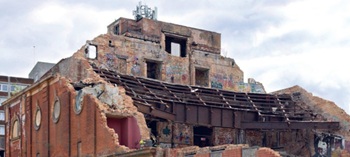
An historic building left to decay.

ECA, JIB and JTL back Fabian Society call to invest in skills for a stronger built environment workforce.

Women's Contributions to the Built Environment.
Calls for the delayed Circular Economy Strategy

Over 50 leading businesses, trade associations and professional bodies, including CIAT, and UKGBC sign open letter.
The future workforce: culture change and skill

Under the spotlight at UK Construction Week London.
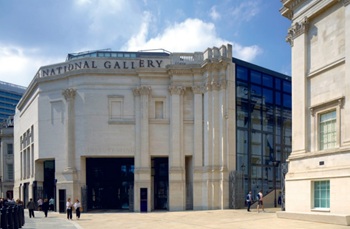
A landmark moment for postmodern heritage.
A safe energy transition – ECA launches a new Charter

Practical policy actions to speed up low carbon adoption while maintaining installation safety and competency.
Frank Duffy: Researcher and Practitioner

Reflections on achievements and relevance to the wider research and practice communities.
The 2026 Compliance Landscape: Fire doors

Why 'Business as Usual' is a Liability.
Cutting construction carbon footprint by caring for soil

Is construction neglecting one of the planet’s most powerful carbon stores and one of our greatest natural climate allies.
Comments